Sunday, May 05, 2013

ON THE DEATH OF A DOG


The Rev. Dana Prom Smith, S.T.D., Ph.D. (5/5/2013)


People who study dogs generally agree that dogs evolved out of wolves, not the jackal as some had once thought.  The story goes that wolves gradually insinuated themselves into the camps and caves of primitive human beings, drawn by food and warmth, or were invited in to provide protection.  Were they invited or did they invite themselves?  Probably both.  It certainly was the case with Roxie.


About six months after our black lab, Flora, had been put down because of kidney cancer, our veterinarian, Dr. Michelle Brennan, in California called to say that she had unusual lab for us, one that she had rescued, and asked if she could bring her by our house.  Her previous custodians had planned to put her down because she had only three legs.  After sniffing each other out, she stayed for 15 years.  She came to the house and wanted to come in, and we invited her in, all of it simultaneously.


          The week before last she died peacefully in our own bed.  She was nearly comatose and incontinent, refusing food and water.  The veterinarian said that her organs “were shutting down.”


The unspoken agreement between the dogs and human beings is a trade-off, protection for food and warmth.  Now, Roxie, a yellow lab, wasn’t much of a protector anymore although she did bark when someone came to the front door.  In human terms at 16 she was about 112 years old.  She didn’t walk on her own anymore, slept most of the day, and possessed a beautiful smile.  With her luminescent pink snout aglow, she always greeted us with a wagging tail, barks of joy, and smiles.  You can’t say that for every loved-one and friend.  With Roxie it was every time.  That’s worth a lot, especially nowadays in such a bellicose society as ours.


          Some have asked why we didn’t put her down earlier.  She was in good health and happy until the last few days which brings us to another, more important reason, that we invite dogs into our houses.    They bring us joy.  They’re great companions.  We play with them, take them for walks, and simply enjoy their comforting presence.  Roxie was an in-house therapy dog.  She was a pleasure, especially her large soulfully hazel eyes.  Stroking her, she drew out stress and anger, replacing them with ease and bonhomie.  She was at our sides on her pad in front of the fireplace as we either watched television or read.  I passed her bed every night as I went to bed.  After my prayers, I always paused to stroke her and kiss her good night, more for me than for her.


          Although many may disagree, Roxie had a soul, just as did Flora.  Souls can be seen in the eyes which I am told are windows to the soul.  After eighty-six years, I have come to a sadness.  Not everyone has a soul because some people had traded them, just as did Faust, for something of lesser value.  It can be seen in their eyes, the eyes of a snake, blank.  We have fancy words for these transactions involving power, privilege, money, lust, and other tawdry goods: sociopath and psychopath.  It’s a trading down.


          Dogs are good at assessing people because they don’t get entangled in the contents of communication.  Some studies have shown that 87% of communication is in gestures, expressions, and tones of voice.  Thirteen percent is in content.  Human beings clog their brains with content and often ignore the real forms of communication.  Roxie didn’t.  Communication other than personal is unreliable and unsatisfactory, automaton like.  Roxie was a whizz at assessing people which is another reason to believe she had a soul. 


I feel sorrow for people who don’t like dogs and despise people who maltreat dogs.  Dogs with souls are far more rewarding companions than human beings who have traded their souls for the tawdry.  We grieve in the emptiness of Roxie’s passing, and in our evening prayers we pray for her soul in her passing.


All in all, the greatest gift of dogs is that they humanize us.  

Copyright © Dana Prom Smith 2013


Dana Prom Smith and Freddi Steele edit GARDENING ETCETERA for the Arizona Daily Sun.  Smith emails at stpauls@npgcable.com and blogs at http://highcountrygardener.blogspot.com.

Wednesday, May 01, 2013

A GATHERING IN THE MOONLIGHT


Tam Nguyen


The full moon meant a good time for my family in the Highlands of Viet Nam.  My father always told me interesting stories.  The story of the bat was my favorite because it always left me with curiosity about night life.  I did not have books or the Internet as I have nowadays.  Now, I can read or search around at the school library.

The full moon was very bright so we didn’t need turn on the lights or make a fire.  My father described to me the anatomy of a bat, the wings were as beautiful as opened umbrella.  I remember that the bat was a wonderful animal.  It had the ability to fly fast in the dark of night.  It had keen visual ability at night.  It also heard well.  It can hear highly pitched sounds.


My father told me a story about the bat and Buddhist lama.  The bat heard that the Buddhist lama was talented.  He understood about universe.  He also practiced divinity so that he could influence all the matter on the earth.  This is the reason that the bat came to confront the Buddhist lama.  Because of the bat’s jealousy of the lama, war happened.  The war was between two of most two equally talented beings on the earth.  It was interesting because they used their best skills, and because they were equal no one won.  Year after year, the bat and Buddhist lama fought and the war kept going.  It was making storms and dry seasons.  The weather was changing.  The war affected human beings.  People who lived by the weather and agriculture lost their crops and hunger was everywhere.  
Finally, the Buddhist lama commiserated with suffering human beings.  The tears ran down the cheeks of the Buddhist lama.  The Buddhist lama had sympathy the poor of human beings.  The bat surrendered to the Buddhist lama because the bat did not have a soul to understand suffering.  The bat was a good, intelligent, and talented animal, but the bat did not have a human sense of love as do human beings.  The animal just survived and went on with natural process.

The war was finished when the bat surrendered by kneeling down. This was the way my father explained to me why the bat sleeps with his head down.  Also for this reason, human beings honor the Buddhist lama by painting bats on the walls or tapestries behind the statues of the Buddha.  The talented Buddhist lama triumphed over the bat because he had big heart to love and accepted the talented animal which was also called the king of dark night.
When there is the full moon, I recalled a good childhood with my father with his stories which he told me occasionally when we harvested crops, corn, beans, and rice and brought them home from the field.  The neighbors gathered together, elders, children, and young people.  The children played hide and seek.  I could not hear well so I was always the loser because I couldn’t seek other children.  My father gave me a trick.  I did not need to move a lot to seek other children or hear their foot steps. I just stayed on one place and moved my head around to see the bushes moving.  I could guess where the children hiding.  Their favorite place to hide was under the bushes on the side of front yard within 3 or 4 meters of the area play.
The musk of night gave off an aroma, cooling, quite, and the smell the earth, and also at night I could hear sounds more clearly, the cricket and soft sound from nature.  The night breaks down the limitations of time.  The moon’s effervescence was like champagne.  The night is extraordinary, something like a stream of consciousness, allowing me stronger perceptions of my feelings as my mind floats.  These intimations of mine made me feel different from my friends who told me that I was crazy when I told them stories.
After the games, we got snacks of steamed fresh corn, steamed fresh peanuts or soy beans from my mother.

Tam Nguyen of Tam’s Gardening Service (853-6111) is a Master Gardener and a student at NAU and the Literacy Center.  Dana Prom Smith and Freddi Steele edit GARDENING ETCETERA and Smith blogs at http://highcountrygardener.blogspot.com and emails at stpauls@npgcable.com.   


Tuesday, April 02, 2013

THE GRAND CANYON CAFE


The Rev. Dana Prom Smith, S.T.D., Ph.D.

   My dentist, Tom Montfort, has been bugging me for years to write about Freddy Wong and the Grand Canyon Café.  Every time I opened wide, he’d talk about Freddy’s spread down in Camp Verde and his onions and tomatoes.  Montfort knew the way to my heart with his talk about onions and tomatoes.


          So, one cold January day while driving by on “66,” I dropped in for a bite to eat and some warmth.  Wong and his café are institutions in Flagstaff.  As the sign on the wall says, “Hunters, fisherman, and other liars are welcome.”  I felt at home.  I was a fisherman for many years and meine Űberfrau often accuses me of the same failing for which my mother accused my father, “spinning witty improvisations on the truth.”


          Montfort’s favorite dish is the “Bert,” a sandwich of bacon, egg, cheese, tomato, and green chili which Wong developed for the late Bert Babbitt.  Having wearied of the “same old” breakfast fare, he said to Wong, “Make me something different.”  When Bert Babbitt died after a long illness, Wong put it on the menu and named it after its progenitor.  Wong is loyal.    


Another of Wong’s gastronomic triumphs is a grilled cheese sandwich with his tomatoes grown in Camp Verde slipped in with the cheese.  Now, connoisseurs of grilled cheese sandwiches know that cheese and tomatoes are delightful culinary companions, especially when grilled between slices of bread.  The reason for the triumph of both the “Bert” and the toasted cheese sandwich is the tomato, the fresh, outside-grown tomato.  Montfort tells me that some aficionados of the “Bert” are such purists that they won’t order it during the winter when Wong is forced to use industrial tomatoes.  Montfort compromises himself and eats it all year long because, as he says, “It’s delicious.”    


Ann Marie Zeller, a gardening buddy of mine, clean water hawk, and habitué of the Grand Canyon Café, tells me that Wong’s chicken fried steak is “to die for.”  However, we’re focused on vegetables.


Wong, a restaurateur with impeccable credentials, was at one time the chef at the Hyatt Hotel in San Francisco, but he is at heart a farmer, especially a truck farmer.  Besides that, fine food demands fresh vegetables.  His odyssey as a farmer began in his mother’s backyard, growing corn as a boy.  He still helps his mother with her backyard garden. 


As anyone with an ounce of wit knows, truck gardening in Flagstaff is challenging.  As a young pastor, I learned that in ecclesiastical vocabulary the word “challenging” meant plowing infertile fields with scant hope for bountiful crops.  A classmate of mine from the hills of eastern Kentucky once said, “Faith looks mighty cold cut up four ways in a frying pan.”      


          At any rate, commercial truck farming in Flagstaff and environs is challenging, and a restaurant needs lots of fresh vegetables so Wong bought a spread down along the Verde River in Camp Verde.  The soil is rich silt, and the water is plentiful.  Now, Wong not only grows vegetables for his restaurant, but also sells them at Flagstaff’s Community Market on weekends.  Indeed, many other restaurateurs in the area buy his vegetables in season.


          Wong grows fresh vegetables from tomatoes, sweet onions, to all kinds of squash.   He prefers heirloom tomatoes, such as Columbia Leaf, Pearson, Mortgage Lifter, and Rainbow.  His squashes run from zucchini, yellow crookneck, patty pan, to butternut, and beyond.  True to his heritage, he plans on growing more Chinese vegetables to sell at Flagstaff's Community Market and use in his restaurant.  Thank God for immigration!


          One of his premier achievements is the development of a contraption made of PVC pipe which he pulls behind his tractor.  It allows him to pierce the plastic row cover, insert the onion set, and tamp it in place in one action.  The restaurateur is also an engineer.


          On May 26, Flagstaff’s Community Market will open for foodies to buy his fresh vegetables.  Of course, the Grand Canyon Café is open all year where he holds forth with spatula in hand and with his wife Tina by his side.        

Copyright © Dana Prom Smith

Photograph of Freddy and Tina Wong courtesy of Jake Bacon.  

Dana Prom Smith and Freddi Steele edit GARDENING ETCETERA for the Arizona Daily Sun in which this article appeared on April 13, 2013.  Smith emails at stpauls@npgcable.com and blogs at http://highcountrygardening.blogspot.com.


Sunday, March 10, 2013

TOMATOES FOR DUMMIES


The Rev. Dana Prom Smith, S.T.D., Ph.D. (3/10/2013)


Lest the reader think the title of this essay indicates arrogance on my part, an accusation frequently found on the lips of meine Űberfrau, let me say that growing tomatoes induces the same humility as do my computer and my new television remote with 61 buttons.  I write with trepidation because I’m no authority and have had spectacular failures in growing of tomatoes along with some surprising successes.  Victims of forces beyond their control, gardens are acts of faith, not certitude.  The thermodynamic concept of dissipation seems apt since all kinds of things, such as cold spells, hail, wind, and diseases, can change a garden’s equilibrium.  In growing tomatoes, there are lots of “Why me’s?”  


As a dummy amongst tomato geeks, my essay is autobiographical rather than prescriptive.  Gardening without a greenhouse, I don’t buy expensive equipment or work hard.  I start with seeds in mini-greenhouses, called pellet kits.  As for seeds, I search out tomatoes that mature in 55-65 days because of our short growing season.  Anything that matures in 80 days means that you’ll be lucky to have about eight days of fresh tomatoes.  I always plant Galina, Sasha’s Altai, Stupice, Prairie Fire, and a couple of others along with a new one.  This year the new one is Beaver Lodge Slicer, a 55 day determinate tomato developed at the Beaver Lodge Horticultural Research Station in Alberta, Canada.


From the middle of March to the early part of April, I embed three seeds of each variety in six of the little discs of the mini-greenhouses.  I keep them moist and put the kit on a sunny windowsill.  I always plant twice as many discs as I will need because nothing ever succeeds completely.  Ted Williams once said that greatness as a batter means failing at bat only seven times out of ten.


Then watching the miracle of life as the seeds sprout into seedlings, I thank God.  Thanksgiving should be twice a year, at the birth of life and the harvest.  Pity the secularists, atheists, and other spiritual flatliners with no one to thank.  Thank, like bless, is a transitive verb.


      About a week after the seedlings have developed true leaves, I   transplant the strongest into bio-degradable quart pots full of planting mix.  After lightly fertilizing them with a balanced fertilizer, I keep them moist and watch them grow on various sunny windowsills throughout the house.  What a delight it is to watch growth especially in an age favoring apocalyptic doom!


About the middle of May, it’s time to put the young plants outside.  The older I get the more I favor container gardening for tomatoes.  The reasons are elementary: control of water and nutrients and protection from various soil-borne and air-borne diseases.  Tomatoes like a rich, friable soil.  Also, the containers can be placed throughout a deck or yard so that the plants aren’t close together, protecting them from the air-borne diseases of nearby plants.  If using a container, be sure to sterilize the soil if it isn’t sterilized already by putting a clear plastic sheet over the container for ten days, letting the sun do the work.


     Gradually introducing the plants to the outside, I plant them in containers, where I shelter them with another mini-greenhouse, the Wall o’ Water.  When it’s safe from freezing beyond the June 15 statistical date, the Walls o’ Water can be replaced with wire cages.


Using a balanced fertilizer the first week or so, I use a low in nitrogen fertilizer afterwards so that the nutrients will go to produce more fruit rather than foliage.  Tomato plants like it damp but not wet.  Now begins the season of tomato adolescence when parents have to keep a watchful eye for bad influences such as air-borne and soil-borne diseases, cankers, wilts, curly leaves, blossom end rot, etc.   If everything goes well, along about the later part of July, all through August, and into early September, I enjoy fresh tomatoes every day, and you can, too.  By the way, my favorite is the Siberian Galina, a golden cherry of luscious flavor.

         For more information check out this Master Gardening site:

http://ag.arizona.edu/pubs/garden/mg/vegetable/tomatoes.html.  
Copyright (c) Dana Prom Smith 2013


Dana Prom Smith and Freddi Steele edit GARDENING ETCETERA for the Arizona Daily Sun in which this article appeared on 3/16/2013.  Smith may be emailed at stpauls@npgcable.com.  He blogs at http://highcountrygardener.blogspot.com.


Saturday, March 02, 2013

SECOND MOST POPULAR VEGETABLE


The Rev. Dana Prom Smith, S.T.D., Ph.D. (3/2/2013)


          The onion is the second most popular vegetable in the entire world right after the tomato, but the pity is that most gardening courses short-change the onion while an excessive amount of time is devoted to the more glamorous tomato.  The indifference toward onions may be that they grow under ground and can’t be seen save for the tops.  The same can be said for beets, turnips, carrots, and rutabaga.  They, too, are passed over in favor of lettuce, spinach, kale, and Swiss chard, but more of them later.  Right now, it’s the onion.


          For starters, the onion is hardier than the tomato which will wilt at the slightest sign of adversity, such as freezes.  The onion needs daylight to thrive, not warmth, and in Flagstaff the first day in the year when there is enough sunlight (12-13-hours) to grow onions is March 15 or the Ides of March, the day Julius Caesar was assassinated in 44 B.C.    Statistically, June 15 is the first day when it’s safe in Flagstaff to leave tomatoes unattended outdoors, and even then the gardener has to watch the weather report like a hawk.  By the time it’s safe to leave a tomato plant outside, the first onions are ready to pull.


Onions fall into three categories, short day, intermediate day, and long day.  Short day onions grow well in the southern latitudes and long day in the northern.  Flagstaff is intermediate day.  Daylight tells the onions when to start growing bulbs and when to stop.  The best planting times for Flagstaff are from the middle of March to the middle of April.

There are two ways to grow onions, from seed or from sets which are really immature, miniature onion bulbs.  Needless to say, sets are easier than seeds but offer less variety.  The sets are best for the slothful.  I use sets.


Onions grow best in raised beds.  They like a ph level between 6 and 7.  In preparing the bed, dig in a good, balanced fertilizer (10-10-10 or 10-20-10.)  About one month after planting, it’s best to fertilize them on the side of the row with a high nitrogen fertilizer and repeat this every 3 to 4 weeks during the growing season. 


After fertilizing them, water them.  Onions crave water but don’t keep them wet and soggy.  Onions do best in a well-drained soil.  Wet tops will lead to disease.  So during the monsoon keep an eye out for blight (leaves begin to turn yellowish) and purple blotch (purple spots on leaves.)  In order to save water, it’s smart to plant the sets in a trench and in an area with good drainage and air circulation.  Our dry climate is one of the blessings of growing onions.

Sets should be planted about an inch deep and 5 inches apart.  They can be planted three inches apart if some of them are going to be used for green onions.  This way they can be plucked right along as they grow.  An onion plant is mature when the tops fall over, and then they should be pulled from the soil and be allowed to dry.  When dried, they are best stored in a cool place where they do not touch one another, such as wrapping each onion in newspaper or small paper bags.


There are three surefire varieties of sweet onion that will do well in Flagstaff: Superstar, Red Candy Apple, and Hybrid Candy.  There are two that are iffy but worth the risk.  The Walla Walla is bred more for long day zones in the north, but it can’t be beat.  Another worth the risk is the TX 1015 Supersweet which does best in the short days of the south, but as a relative of the famous Vidalia of Georgia, it, too, is worth it.


Freddy Wong at the Grand Canyon Café grows thousands of sweet onions at his spread down in Camp Verde, but he didn’t tell me where he gets his sets.  I get mine from Brown’s Omaha Plant Farm in Texas (www.bopf.com.)  Remember: second is often better.

Dana Prom Smith © 2013


Dana Prom Smith and Freddi Steele edit GARDENING ETCETERA in the Arizona Daily Sun where this article appeared on March 2, 2013.  Smith emails at stpauls@npgcable.com and blogs at http://highcountrygardener.blogspot.com.


Sunday, February 24, 2013

GARDENING IN THE SUBJUNCTIVE MOOD


The Rev. Dana Prom Smith, S.T.D., Ph.D. (11/12/12)


          The subjunctive mood, sadly, has pretty well passed out of general usage which leaves us with only the indicative and imperative.  The subjunctive is probably too sophisticated for our modern times, enamored, as we are, with commands, dogmas, ideologies, and certainties as though we know the truth.  Ironically, if we claim to know the truth, we’re trapped in our certitudes and shielded from ever learning anything new.  According to my high school Plain English Handbook, “The subjunctive mood expresses doubt or wish or condition contrary to fact” as in “I wish I were going home for Christmas.” 


          The indicative mood is for statements and questions as in “I’m going home for Christmas.”  While the indicative is used more for descriptions, the imperative is used for commands which assume knowledge of some hidden truth.


Nowadays, one seldom hears the subjunctive, seldom a doubt.  Almost all of the politicians speak in imperatives, especially the ones whose nostrums have failed in the past.  Even horticulturalists speak in the imperative, promising success if their instructions are executed.  In addition, the apocalyptic tenor of the times begets the imperatives of doom, delivered in stringent tones with corded necks. 


          Bureaucrats, academicians, religious authoritarians favor the imperative.  Considering themselves experts, they’re incapable of expressing doubt or uncertainty; however, most veteran gardeners favor the subjunctive.  I’ll choose a veteran over an expert any day.  Also, psychologically the imperative is often used to cloak uncertainty.  Gardening is subjunctive.  No one is ever exactly sure what’s going to happen.


          Tomatoes are subjunctive.  Akin to children, tomatoes seldom turn out as expected, sometimes for the better and sometimes “not so.”  An Episcopal priest once offered a toast at a wine tasting:  “Wine makes all men handsome, all women beautiful, and even makes one’s children promising.”


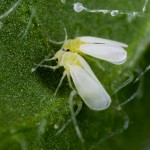
A tomato’s adolescence is an iffy time along about late June or July.  A beautiful Siberian of ours, loaded with fruit, came down with white flies, and spray it as I would early in the day before sunrise, they never went away.  We had to destroy it, lest it infect the rest of our tomatoes which were the tastiest we’d ever grown, at least according to meine Űberfrau who said that they were almost as good as her father’s.


          As with all failures, I grieved at first.  Since my hope had been dashed, I felt either guilty or vindictive.  Last spring I turned 85, and we had a big party in Redondo Beach, arranged by my daughter who has turned out well although not as expected.  As a result, I didn’t start from seeds, and this allowed me to blame the nursery where I bought the plant.  Of course, I could’ve still started with seeds even though the time had passed, but I’m slothful.  Whether guilty or vindictive, I was in a subjunctive mood, wistful and doubting, mulling over “what could’ve been if I had only.”


          However, doubt implies faith.  The natural process didn’t collapse with the collapse of my Siberian.  Faith isn’t the same thing as the certainty implied in the imperative.  Faith isn’t knowledge, but rather an assumption that the natural process will be repeated, so faith implies hope, as Saint Paul pointed out, and charity as well.  I’ll plant the seeds in faith with hope they’ll sprout, and I’ll surely raise them with charity.


In Shakespeare’s Macbeth, Banquo said to the three witches, “If you can look into the seeds of time, and say which grain will grow and which will not, then speak to me.”  They did, and what a tragedy it was.  Certainty isn’t always a good thing.


Of course, we can’t learn anything worthwhile unless we first fail.  Success tutors the arrogant.  Next spring, I’ll start my tomatoes from seed, and I’ll only plant the seeds of tomatoes that have done well before and a couple new ones recommended by a veteran like Jim Mast.  Most of all, I’ll be vigilant, wary of the hazards of my tomatoes’ adolescence, those subjunctive cankers, blights, spots, molds, rots, wilts, and white flies.  If you don’t handle grief well, tomatoes may not be your cup of tea.

Copyright © Dana Prom Smith

Dana Prom Smith and Freddi Steele edit Gardening Etcetera.  Smith emails at stpauls@npgcable.com, and blogs at http://highcountrygardener.blogspot.com.


Monday, February 11, 2013

LA COMTESSE DE CHAMBORD


The Rev. Dana Prom Smith, S.T.D., Ph.D. (2/10/2013)


          Small children often think that the bigger the box the better the gift.  I know I did, and my mother frequently cautioned me that many times the best things come in small packages, such as diamond rings. She gave me an amethyst ring when I graduated from high school and a gold pen and pencil set when I graduated from college, all in small packages.  A widow with three boys to rear during the Great Depression, she didn’t have much disposable money for luxuries so those gifts were dear.  I still use fountain pen with all of its memories much to the befuddlement of my students at The Literacy Center who know only that dreary device, the ball point pen.


          Another small package is the French bean, haricot Comtesse de Chambord (Phaseolus vulgaris.)  It’s so small that commercial growers won’t bother with it.  Since it can’t be found in commercial markets, we have to grow it ourselves, and like that gold pen and pencil set, it’s a treasure.  In an era of industrial agriculture which is too big to bother with small things, I’ve found once again that small is best.


          Originally called an Hungarian rice bean, it was baptized Comtesse de Chambord which sounds a lot better than “Hungarian rice bean.”  As the song writer Larry Siegel penned:  “Everything sounds better in French,” especially when it’s gustatory or culinary.  The longer I grow vegetables, the less inclined I am to grow vegetables easily purchased at the supermarket.  If I had the skill, knowledge, and means to build a car from the ground up, I sure wouldn’t build a Ford or a Chevy, much less a Mercedes Benz.  I’d want something unique.  Why grow the old familiar as long as you can grow a unique and rare heirloom?


          First, the Comtesse de Chambord bean is on the endangered list.  The seeds are hard to find, but there’s a source in British Columbia, the Two Wings Farm (www.twowingsfarm.com).  Since they’re so rare and endangered, it is probably wise to save the seeds, especially since the folks at Two Wings Farm aren’t in the best of health.  The beans themselves can be harvested in about 100 days.  In addition to being rare, they’re very old, first being mentioned about 1880.


They’re easy to grow, especially in containers, and they’re bountiful.  A semi-vining bush bean, they require only a modest wire cage, growing no more that three feet at the most.  The pod is only about three inches long and can be eaten much like a sugar snap, fresh and sweet, right off the vine, or as with other green bean pods, blanched or sautéed.  The beans themselves are white and about ¼ in long.  They don’t have to be soaked overnight, requiring soaking for only about fifteen minutes.  The taste is sweet, and they do well in salads as well as stews, soups, and cassoulets.


          The bean is named after the Comtesse de Chambord, the Archduchess Maria-Theresa de Modena, the wife and then widow of Le Comte de Chambord, at one time a pretender to the French throne.  Maria-Theresa was his second cousin and second choice, his first being her younger and more beautiful sister; however, although she was reported to be less attractive, Maria-Theresa was wealthier.  The Comte de Chambord rose is named for him and is recommended by David Austin.  A Portland rose it dates from about 1870.


          The Comtesse de Chambord does well in a well-composted soil, the seeds planted about 6 inches apart, an inch deep, and about 2 feet apart if planted in rows.  I’ve found them to do very well in containers in concentric circles about a foot apart.  Also, they can be planted outside in May surrounded by Walls o’ Water which not only provide the seeds with a circular green house but also the seedlings with protection from ground squirrels.  Once our plants began to mature, our resident ground squirrel, Elvis, lost interest.


          The phrase “less is more” first coined by Robert Browning in his poem “Andrea del Sarto” fits our diminutive haricot Comtesse de Chambord when small is best.

Copyright © Dana Prom Smith 2013


Dana Prom Smith and Freddi Steele edit Gardening Etcetera.  Smith may be emailed at stpauls@npgcable.com and blogs at http://highcountrygardener.blogspot.com.